The Narrative
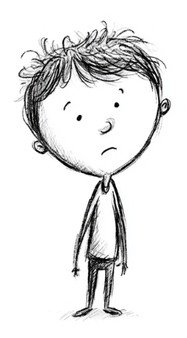
This is Dustin.
Dustin is average. His intelligence is average. His height is average. His eye-color is average. His hair-color is average. In short, Dustin is average.
You are far from average.
Your hair-color is … well, you know.
Your eye-color is … well, you know.
Your height is … you get the picture.
It’s not clear why you are hanging out with Dustin. But you are, and you are okay with it—at least for now—because Dustin’s pantry is very, very above-average. (It’s just too bad that the pantry comes with a Dustin …).
Imagine this. It is another day, another trip to the pantry, another fall through space and time. You find yourself standing in the middle of a dusty road. The road winds between fields and low, grassy hills. In the far distance, you can see a cluster of stone buildings surrounded by a wall.
“Where do you think we are?” Dustin asks.
“I don’t know,” you answer, a little disappointed that Dustin made it through the pantry as well. You wonder if there is any way to keep him in the pantry. He would be fine there, you think, there are plenty of snacks. Your thoughts are interrupted by the rattle of wooden wheels behind you. Turning around, you see a cart coming toward you, pulled by a pair of donkeys. The driver calls out sharply and waves for you to get out of the road. You jump aside, but Dustin is slower to move. The man shouts angrily at him, and swerves off and passes by, with a cloud of dust kicking from the cart-wheels.
Dustin coughs, and then says, “He could have asked politely.”
“I think he did,” you say, “at least at first.”
As the dust settles, you notice an old man walking toward you from the opposite direction. He wears a long cloak over a plain tunic, and a leather bag hangs from one shoulder. His thick beard is streaked with gray, but his eyes are young, even smiling.
He approaches you and Dustin. “Well, you two appear to be lost,” he says, chuckling a bit.
“We are,” you say. “Where are we?”
The man gestures down the road. “That road leads to Abdera.”
You wait, hoping that the name will help. It does not.
“And where is Abdera?” you ask.
“Just beyond those walls.”
“I think we mean something bigger than that,” Dustin says. “What land are we in?”
The man studies both of you. “You are near the northern shore of the Aegean, in the Greek city of Abdera.”
You stare at him. “We’re in Greece?”
“My name is Democritus,” he continues. “May I know yours?”
You tell him your name and then introduce Dustin. Democritus repeats both names carefully, as though he is committing them to memory.
“You should come with me,” he says. “I am walking back to the city. If you remain in the middle of this road, the next cart driver may be less patient.”
You and Dustin fall into step beside him. The road rises gently toward Abdera, and the city walls become clearer as you walk. Farmers pass carrying baskets. A shepherd guides a small flock along the edge of a field.
You look up at Democritus and ask, “What kind of work do you do?”
“I suppose most people would call me a philosopher.”
“What does a philosopher do?” Dustin asks.
“He attempts to become wise.”
“Have you done it?”
“Become wise?” Democritus asks. “Not yet. But I think I am getting closer.”
“Did someone teach you to be a philosopher?” you ask.
“Many people did,” he says. “I have traveled great distances to find wise people and learn from them.”
“I want to travel,” Dustin says, “but I don’t have any money.”
You think this is a rather strange comment, given the fact that you and Dustin have done a considerable amount of travel over the past few weeks, but you keep your comments to yourself.
“Well, my father was a wealthy man,” Democritus says. “When he died, he left a large inheritance to my brothers and me. I was still young, but I suddenly possessed enough money to purchase land, build a fine house, or enter into business. Those were the sensible choices, according to nearly everyone in Abdera.”
“But you didn’t do any of those things,” you say.
“No. I wanted to understand the world. I had so many questions that the people around me could not answer. So I took my portion of the inheritance and left. I started traveling the world.”
“Where did you go?” you ask.
“Wherever I believed I might find a wise person who could answer my questions. I crossed seas and followed roads into distant lands. I listened to teachers, priests, geometers, and men who watched the stars. I studied the earth beneath my feet and the heavens above me. I heard many explanations of how the world began, what it is made from, and why it changes.”
“So you spent your entire fortune asking questions?” Dustin asks skeptically. “That seems kind of dumb.”
“When you say it that way, it does sound rather foolish,” Democritus says. “That is almost exactly what the people of Abdera thought.”
“What happened when you came home?” you ask.
“The people were furious. I had left as a young man with a large inheritance. I returned older, carrying little more than my clothes and my writings. Many believed I had squandered everything my father had given me. At that time, wasting an inheritance was illegal. People wanted me punished.”
“You got in trouble for traveling?” Dustin asks.
“Well, they thought my travels were a waste of my inheritance,” Democritus responds. “They thought I should have bought houses or land with the money.”
“So what did you do?” you ask.
“I asked the people to listen before they judged me. I had spent my inheritance, but I did not believe I had wasted it. I gathered what I had learned, along with the conclusions I had reached, and wrote it all in a book.”
“Did that settle the issue?” you ask.
“Not at first, but then I began to read it aloud to them,” Democritus says. “In fact, I ended up reading the whole thing to them.”
“Was it a big book?” Dustin asks.
“It was.”
Dustin looks shocked. “And you read the whole thing? It’s kind of like you were punishing them!”
You are embarrassed by Dustin’s tactless comment, but Democritus laughs graciously. “Perhaps it was, but when I finished, the people no longer accused me of wasting my inheritance. They decided that what I had brought back was more valuable than what I had spent. They awarded me a great sum of money, and they even raised a statue in my honor!”
Dustin stops walking. “Wait. You spent your fortune traveling, came home, read everyone a book, and they gave you another fortune?”
“That is a very short account of what happened, but I suppose that’s about right,” Democritus responds.
“Wow,” Dustin whispers. “I need to start reading more.”
“What did you write in the book?” you ask. “What was so important that everyone changed their minds?”
At first, Democritus seems to ignore your question. He bends down and picks up a leaf from the path. Democritus holds the leaf up to the sunlight. “What happens if I divide this leaf in half?”
Dustin looks offended by the question. “You will have two parts, obviously.”
Democritus tears the leaf in two, and then looks at Dustin. “What happens if I divide it again?”
“The same thing,” Dustin says. “You will have half of a half.”
Democritus does exactly that. He takes a half and tears it in two. He places one piece in your hand and another in Dustin’s.
“What happens if we divide those pieces again? Try it.”
You do, taking the piece in your hand and tearing it in half.
“Keep going,” Democritus says, watching with interest as the two of you begin tearing the leaf into smaller and smaller pieces. “See how far you can go.”
Activity 1: Picturing the Uncuttable
Pause here and give Democritus’ instructions a try. Find a leaf and a pair of scissors, and cut the leaf in half. Then take one of those halves and cut it in half. Then take one of those halves, and cut it in half. Do you get the pattern? Keep going.
- How many times can you repeat that process before you can’t cut anymore?
- Even after you can’t cut anymore, do you think there might be a way to cut that very tiny piece you have left? With a tiny knife? With a laser?
- If you were using a very precise laser, how far down could you cut? Is there a point at which you could simply no longer cut it? Is there a piece of leaf that is so small that it simply cannot be cut—it is uncuttable?
Now take something else, like a piece of paper, and repeat the cutting process with that.
- Is there a piece of paper that is so small that it is uncuttable?
- If there is a piece of paper that is uncuttable and a piece of leaf that is uncuttable, will the uncuttable pieces be the same material? Will they look the same? Or will they be different materials? In other words, are leaves and papers made from the same stuff?
You probably weren’t able to cut down as small as you would have liked. So, let’s use imagination.
Grab your copy of The Laboratory: Apprentice Journal, and turn to the page for this lesson. On that page, there is space for you to draw what you think the absolute smallest part of a paper or leaf would look like. We will come back to your drawing later.
The Narrative Continued
After a couple of minutes, Dustin stops. “I can’t tear any further,” Dustin says. “These pieces are too small for my fingers.”
“Do you think you have found the smallest piece of leaf possible?” Democritus asks.
You look at the tiny pieces in your hand. “I don’t think so,” you say. “If I had a smaller tool, I could cut the pieces smaller. Those pieces would eventually be too small for that tool, but I could then find an even smaller tool and just keep going.”
“Do you think that might continue forever?” Democritus asks.
You look at the tiny fragment in your hand. “I don’t know,” you say.
Dustin is still thinking about it. “Maybe the pieces just keep getting smaller forever. You could never reach the last one.”
“Perhaps,” Democritus says.
“Or maybe there is a last piece,” you say. “Something so small that it can’t be divided anymore.”
“Which is it?” Dustin asks.
Democritus smiles. “No one has ever cut an object small enough to find out. No one has seen the smallest piece. But I have considered the question for many years, and I have come to a conclusion.” He takes the fragment from your hand and holds it between his thumb and finger. “I believe there must finally be a piece that cannot be divided. If we could continue beyond the limit of our fingers, beyond the edge of the sharpest blade, and beyond what our eyes can see, I think we would eventually reach something that could not be cut into anything smaller. I call such a thing the atomos.”
“Atomos?” you repeat.
“It means ‘the uncuttable.’”
Dustin squints at the space between Democritus’s fingers. “Is there an atomos in your hand right now?”
“There are more than I could count.”
“Where?”
“In the leaf.”
“I don’t see them.”
“Neither do I.”
Dustin looks surprised. “You’ve never seen one?”
“No, no one has,” Democritus says.
“Then how do you know they are there?”
“I do not know in the same way that I know this road lies beneath my feet,” he says. “I cannot point to an atom and show it to you. I reach it through reason. I see things break apart. I see them wear down, crumble, dry, rot, burn, and change. Yet I do not believe they can be divided into nothing. So I reason that beneath everything we see are pieces too small for us to see—pieces that cannot be divided or destroyed.”
“You think everything is made from them?” you ask.
“Absolutely everything. All that we see and experience is made of atoms moving and bouncing and spinning through space.”
Democritus pauses a moment, then chuckles. “Well, you asked what my book was about,” he says. “That was it.”
“That was a long answer,” Dustin says. “I am surprised anyone paid you for that.”
Activity 2: Modeling an Atom
Though not everyone believed Democritus’ theory about atoms, he shaped the way many people saw the world. And even though he lived a long, long time ago, people today think he gave a pretty good description of how the world works. The stuff around us is, indeed, made of tiny pieces, and those pieces are now called ‘atoms’ in honor of Democritus.
Want to see what one looks like? In 2021, a photograph was taken of an atom. Take a look at it here. What do you notice? The little dots of light are the atoms. They are constantly moving, so the image is fuzzy and it is hard to see exactly what they look like, but that is the clearest picture of an atom that we have.
Want to see something even crazier? In 2013, engineers made a movie—the tiniest movie ever made—from just a few atoms. The movie, called A Boy and His Atom, is only a couple of minutes long, but it is amazing when you realize what these engineers accomplished. Take a moment to watch the movie linked below.
It is tough to get a clear sense of what an atom looks like from these pictures because they are very, very tiny. Still, scientists have created models that illustrate what atoms are like. These models aren’t exact, but they can be helpful for visualizing that mysterious realm of existence. The basic model is usually presented like the image below.
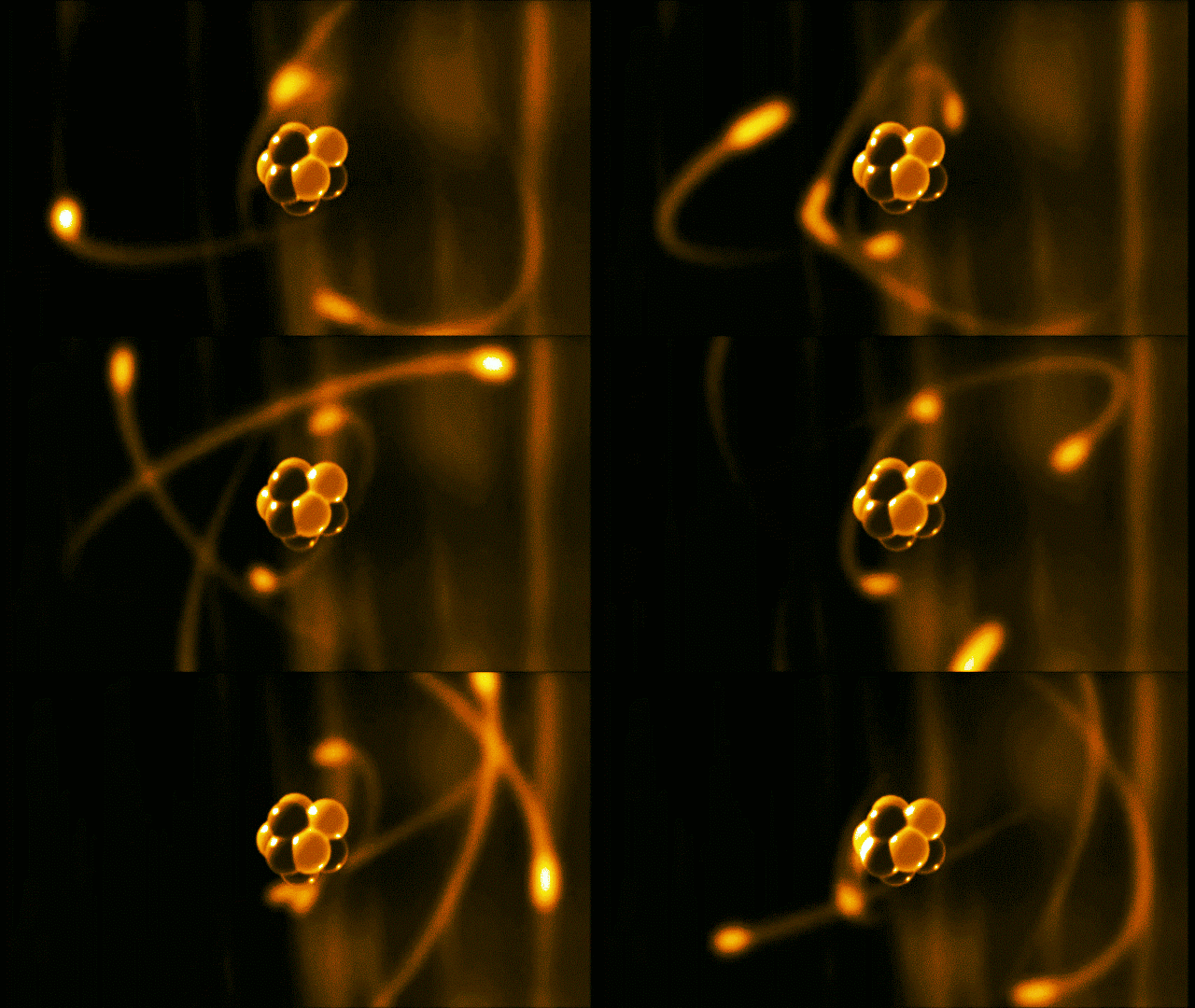
Do you notice something confusing in the image above? The ‘uncuttable’ atom is actually made up of even smaller pieces. It is cuttable. In this model, there is a clump in the middle (that is called the nucleus), and the clump is made of little particles (some are called protons and the others are called neutrons). And on the outside are other particles (called electrons). The electrons are orbiting the nucleus, as though the nucleus is a sun and the electrons are planets.
Looking at pictures is fine, but making a model is better. There are many ways to make a model of an atom. Some ways are explained on this page, and another is illustrated here. Take a look, and see if you want to do one of those or design your own. Since there are many ways to make a model, there are many different materials you can use, but some of the most common include the following:
-
- Playdough or clay
- Craft pipe cleaners
- Craft pom-poms
- Beads
- Paper plates
A simple atom to model is the helium atom. To do so, you should have a nucleus of two neutrons, two protons, and two electrons. If you are looking for something more complicated, look up different atomic structures and find one that interests you.
Once you are done with your model, return to the page in your Apprentice Journal for this lesson. Earlier, you drew a picture of what you imagined an atom might look like. Now add a drawing of the model you just created (or you can print a photo of it and paste that into the journal). Then compare the two.
How are they similar?
How are they different?
Extensions
Want to get a sense of just how small an atom is? Take a look at the brief video below.
This lesson focused on Democritus, an ancient Greek. Atomic theory has come a long way since he was recording his thoughts and observations. If you want to see the history of atomic theory from Democritus to the present, take a look at this TedEd video. This may be helpful for students who want a better sense of the current state of atomic theory.
Perhaps you already know that the atom model made in this lesson doesn’t really reflect the atomic models developed in more recent physics. If you want to do a (very) deep dive into atomic physics, you can watch the video below which tries to present a more updated model. This is way more than the average person is going to follow, but we are putting it down here just in case you aren’t average.